A Government of Convenience, a Democracy of Contempt.
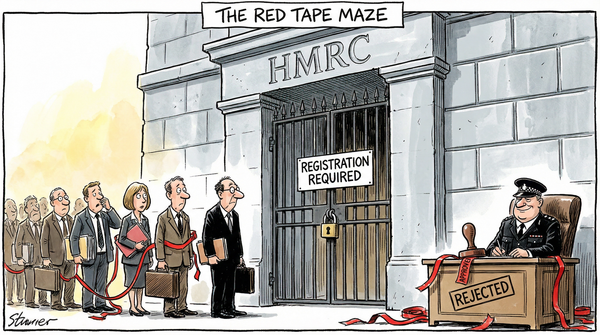
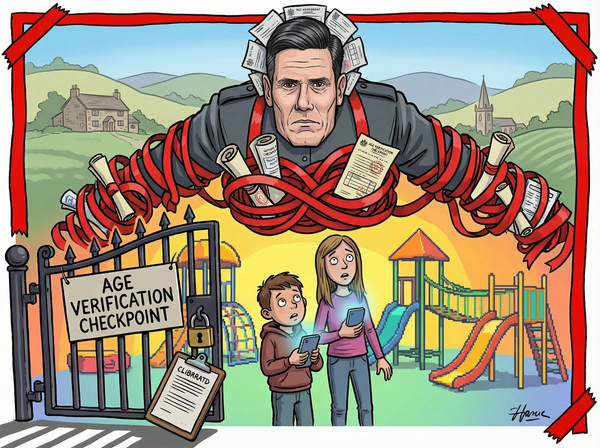
This is not leadership. It’s the panicked shuffling of papers in a failing bureaucracy devoid of ideas, devoid of a plan, devoid of beliefs: an attempt to insulate the powerful from the consequences of their own decisions.
By The Wobbly Editor, 18 February 2026
Our Prime Minister has come to view the foundations of our democracy as inconvenient variables in an ever more complicated series of political calculations designed to save his skin. That he sees the rules as being for ‘other people’ gives off a particular whiff of hypocrisy given his pre-election haranguing of the Tories.
It's becoming an unavoidable truth though, that Starmer & Co. see the law not as a set of principles to be upheld, but as a series of obstacles to be navigated, or, if necessary, ignored. It’s a mindset that's as arrogant as it is corrosive, and it is one that appears to be increasingly prevalent in the current regime.
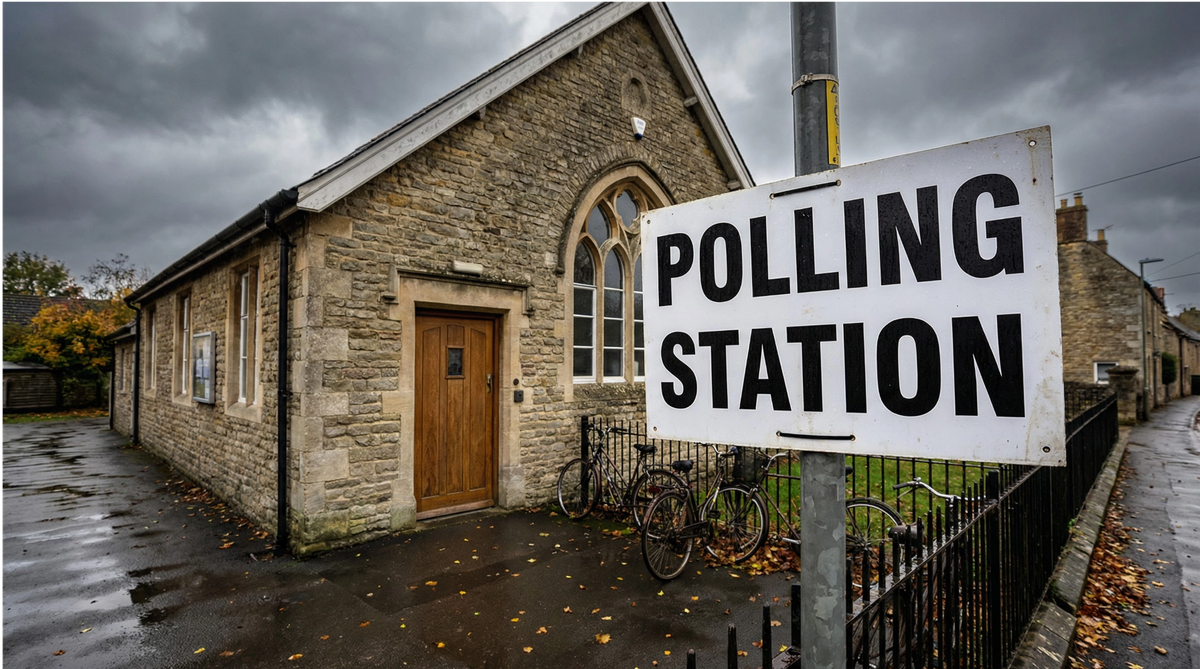
This week’s U-turn on the postponement of local elections is a case in point. The decision to delay the polls in 30 council areas, affecting some 4.6 million voters, was always a dubious one. The official justification - that it was necessary to ease the administrative burden of local government reorganisation - was a flimsy pretext for a move that was transparently self-serving. It was a decision that reeked of political convenience. The idea that our electoral machinery, which has weathered world wars and national crises, would buckle under the strain of a bureaucratic reshuffle is, frankly, insulting to the intelligence of the electorate.
What’s most revealing, however, is not the decision itself, but the manner of its reversal. The Government did not, as one might have hoped, have a sudden crisis of conscience. It did not wake up one morning and rediscover its commitment to the democratic process. No, it reversed its decision because it was forced to. It did so because Reform UK, in a move that was as shrewd as it was principled, brought a legal challenge that the Government knew it would lose.
Reform called the Government’s bluff, and the Government, holding a losing hand, had no choice but to fold. One has to ask why it took the threat of a High Court hearing for it to recognise the manifest illegality of its own actions. The legal advice that prompted the U-turn was not, one suspects, a sudden revelation. It was, more likely, a confirmation of what ministers already knew - that they were acting outside the law. They proceeded anyway, in the hope that no one would have the courage or the resources to challenge them.
It was a cynical gamble, and it failed, leaving the taxpayer to foot the bill for both the Government’s legal fees and the £100,000 paid to Reform UK. The fact that the decision to reverse the policy was handed to a junior minister, rather than the Secretary of State who made the original decision, is a further sign of a government that is more interested in managing its own political exposure than in taking responsibility for its actions. It’s a government of convenience, not of conviction.
This is not leadership. It’s the panicked shuffling of papers in a failing bureaucracy devoid of ideas, devoid of a plan, devoid of beliefs: an attempt to insulate the powerful from the consequences of their own decisions. For the councils in the South West that were affected by this shabby affair - Cheltenham and Exeter - the U-turn is a welcome, if chaotic, development. They now face the unenviable task of organising elections in a matter of weeks, a task that is the result of both the Government’s incompetence and its dishonesty.
But at least they will have elections. At least their residents will have a say. What this episode reveals is a government that has become dangerously detached from the principles that are supposed to underpin our democracy. It’s a government that sees the law as an inconvenience, and elections as a threat. It is a government that, when faced with a choice between what is right and what is convenient, will always choose the latter. This is more than just a political miscalculation - it’s a symptom of a deeper malaise, a creeping contempt for the very idea of democratic accountability. And that, for all of us, should be a matter of the gravest concern.
Be concerned. But stay Wobbly.