From Concorde to Concerts: The Rebirth of Filton
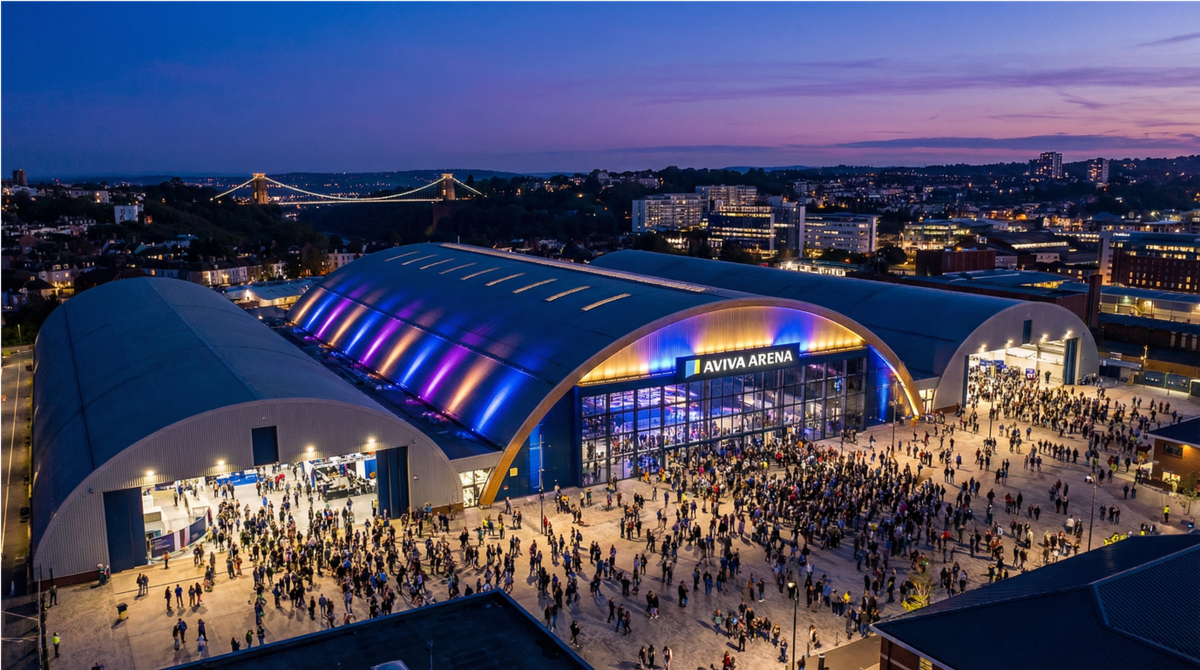
The announcement of the 20,000-capacity Aviva Arena at the historic Brabazon Hangars marks a decisive shift from public sector indecision to private sector ambition.
By the Wobbly Editor, 21 February 2026
I’ve always found Bristol to be a curious place – a blend of the historic and the hyper-modern. It has a very unique ‘feel’ to it amongst British cities. It’s a place of some fairly steep hills, elegant Georgian terraces, world-leading aerospace engineering, of maritime heritage, and a vibrant, sometimes fractious, cultural scene. Yet for all its self-evident dynamism, there has long been a sense that the city punches below its weight on the national and international stage. It has lacked a certain kind of infrastructure that announces a city’s arrival as a global destination.
For decades, the story of a large-scale arena for Bristol has been a rather sorry tale of false starts, political wrangling, and a collective failure of imagination. The city, and indeed the wider South West, has watched as Manchester, Birmingham, and London built and upgraded world-class venues, attracting the biggest global names in music and entertainment, while Bristol was forced to make do with a more ‘parochial’ level of artist. The economic and cultural cost of this has been significant, with millions of pounds in potential revenue flowing out of the region as residents travelled to the Midlands or to the capital for major events.
That, I’m pleased to say, is about to change. The announcement this week of the Aviva Arena, to be built in the iconic Brabazon Hangars at Filton, is not merely another development project. It’s a statement of intent. It’s a story of purposeful regeneration, of private sector ambition succeeding where public sector indecision has faltered, and of a region finally claiming its rightful place on the world stage.
Let us consider the sheer scale of what’s proposed. This will be a 20,000-capacity, placing it in the top tier of UK arenas, on a par with London’s O2. It’s expected to host over 120 major events a year, attracting 1.4 million visitors annually and contributing an estimated £1 billion to the local economy in its first decade. The project will create 2,000 jobs during its construction and a further 500 permanent roles once operational. These are not trivial numbers - they represent a significant and long-term investment in the economic future of the South West.
The location itself is deeply symbolic. The Brabazon Hangars are not just any brownfield site. This is where every UK Concorde was built, a place synonymous with a certain kind of post-war British ambition and technological prowess. For these magnificent structures to be repurposed, to be brought back to life as a hub of 21st-century culture and entertainment, is a powerful act of regeneration. It honours the past not by preserving it in aspic, but by making it relevant and productive for the future. This is not about nostalgia, it’s about building on a legacy of innovation.
Of course, no project of this scale is without its challenges or its critics. One of the long-standing obstacles to a Bristol arena has been transport. An arena without adequate public transport links is, after all, little more than a recipe for traffic chaos. This is where the Aviva Arena proposal demonstrates a more integrated and thoughtful approach than its predecessors. The new Filton North train station, due to open this year, will be on the arena’s doorstep, connecting it directly to Bristol Temple Meads and from there, the wider region, with direct links to Exeter, Bath, Gloucester and Cheltenham. Developer YTL is investing a further £3.1 million in local transport infrastructure, with a clear focus on reducing car dependency. This is not a case of building a venue and hoping the transport will follow, it’s about developing an integrated destination.
What this project represents, fundamentally, is a vote of confidence in Bristol and the South West. It’s a recognition that the region has the economic and cultural dynamism to support a world-class venue. It will end the absurdity of a major British city being bypassed by major international touring artists, and it will create a powerful new anchor for the region’s visitor economy. The benefits will ripple out, supporting hotels, restaurants, and the wider supply chain.
It’s particularly encouraging that this is a private-sector-led initiative. It demonstrates that where there is a clear business case and a supportive planning environment, private capital can be unlocked to deliver the kind of transformative infrastructure that the public sector so often struggles to deliver. This is not a story of government subsidy, but of commercial vision.
As we look towards the arena’s opening in 2028, we should see this for what it is: a catalyst for regional growth, a symbol of renewed ambition, and a decisive step towards positioning the South West not as a beautiful but peripheral part of the UK, but as a dynamic, forward-looking region ready to compete on a global stage.
The future’s bright. Stay Wobbly.