The Gatekeepers of Whitehall: HMRC’s Power Grab
The Government does not trust the market, it does not trust the professions, and it certainly does not trust the taxpayer.
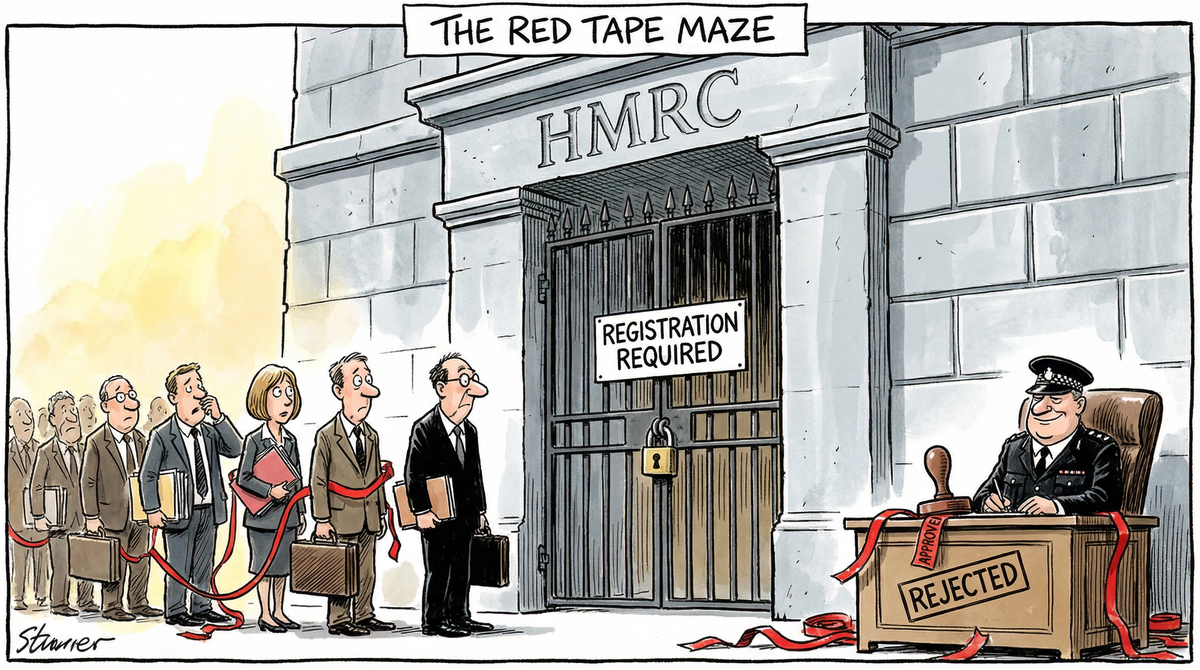
The way in which this Government expands its reach is becoming worryingly familiar. It begins with a consultation, usually framed around a noble objective - protecting consumers, raising standards, or tackling avoidance. It is followed by a period of reassuring noises from ministers, promising a "light touch" and "partnership with the sector." And it ends, inevitably, with a new layer of mandatory bureaucracy, backed by the threat of penalties and the quiet expansion of state power.
The latest victims of this regulatory ratchet are the nation’s tax advisers. From 1 April, any professional who provides tax advice and interacts with HMRC on behalf of a client will be legally required to register with the long-arm of Rachel Reeves’ increasingly pernicious tax authority. Those who fail to comply face penalties and "stop notices."
To the casual observer, this might sound like sensible housekeeping. Why shouldn't tax advisers be registered? But look closer, and the reality of the Finance Act 2026 reveals itself not as a consumer protection measure, but as a significant and troubling power grab by HMRC.
Consider the context. In the Budget of 2025, the Government explicitly stated that it would not regulate tax advisers, promising instead to work in partnership with the sector to raise standards. Yet here we are, barely a year later, with another pre-election promise broken, a mandatory registration regime, and a suite of "enhanced powers" for HMRC to sanction advisers from April. The partnership, it seems, was strictly temporary – or electorally expedient – either way, it stinks.
The Chartered Institute of Taxation has already raised the alarm, warning of the impact that these proposals will have on reputable firms and practitioners, and pressing ministers over the "wide scope" of HMRC's new powers. Their concerns are entirely justified. By forcing every accountant, bookkeeper, and financial adviser to register, HMRC is effectively positioning itself as the gatekeeper to the profession. It’s granting itself the power to decide who is, and who is not, permitted to represent the taxpayer.
This is a profound shift in the balance of power between the citizen and the state. The tax adviser exists to help the individual or the business navigate the labyrinthine complexity of the UK tax code - a complexity, to the extent it needs to be pointed out, that is entirely of the Government's own making. They are the taxpayer's advocate. To make that advocate's right to practise dependent on the approval of the very authority they are negotiating with is a clear conflict of interest.
Furthermore, this mandatory registration is yet another barrier to entry in an economy already suffocating under the weight of compliance. For the large, multinational accounting firms, this is merely another administrative hurdle to be absorbed into their overheads. But for the sole practitioner in Somerset, or the small high-street firm in Devon, it’s another cost, another form to fill in, another risk of penalty.
This is the hallmark of the current administration. Whether it is Making Tax Digital, the imposition of gambling affordability checks, or the relentless expansion of employment tribunals, the instinct is always the same: to centralise, to monitor, and to control. The Government does not trust the market, it does not trust the professions, and it certainly does not trust the taxpayer.
The mandatory registration of tax advisers will not stop the determined promoters of tax avoidance, who will simply find new ways to operate in the shadows. What it will do is make it harder and more expensive for honest businesses to get the advice they need, while granting HMRC unprecedented leverage over the professionals who dare to challenge them. It’s a quiet, bureaucratic coup, and the South West’s business community will be the poorer for it.