The Slow Strangulation of the South West: How Government Policy is Killing Coastal Enterprise
The businesses of the South West are asking for a government that is on their side, not on their back.
By The Wobbly Editor, February 6, 2026
A damaging fiction that persists in government policy is that all businesses are the same. Perhaps ‘fiction’ is the wrong-word. It’s an ‘illiteracy’, or an ‘ignorance’. Either way, it has led to decades of one-size-fits-all policies that have seen uniform regulations imposed while economic realities have either been conveniently, or negligently, ignored. It’s a fiction / illiteracy / ignorance, that is currently strangling the life out of the South West’s tourism and hospitality sector.
The story of Splashdown Quaywest, the largest water park of its kind in the country, is a case in point. Here's a successful, family-run business on Devon's English Riviera that enjoyed record visitor numbers last summer. It has planning permission to expand, to invest, to create more jobs and to attract more visitors to the region. And yet incredibly, it’s reported that it’s in “survival mode”.
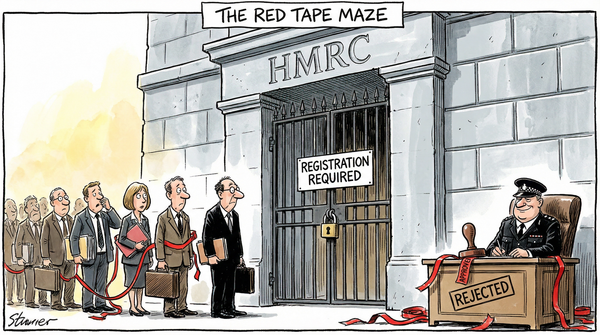
Why? Because its business-model is being systematically dismantled by a series of Government policies that are as disconnected from the realities of running a seasonal, capital-intensive business as it's possible to be. A gas bill that triples from £15,000 to £45,000 in a single month. An increase in employer National Insurance contributions from 13.8% to 15%. An unrelenting upward march of the minimum wage. An utterly bonkers rise in its business rates. All of these are the result of deliberate Government policy.
The One-Size-Fits-All Fallacy
The tourism and hospitality sector in the South West is not a collection of the nine-to-five office jobs that the Government appear to believe are uniform across the country (although if the continued transfer from private to public sector employment continues, perhaps it soon will be). It’s a complex ecosystem of seasonal businesses, of high-overhead attractions, of businesses that are uniquely exposed to the vagaries of the weather, of energy costs, and of discretionary consumer spending. To treat these businesses as if they were identical to a software company in Shoreditch or a law firm in Manchester is not just lazy, it’s the epitome of economic illiteracy.
And yet, that is precisely what decades of Government policy has done - albeit with a particular pernicious enthusiasm by the current administration. The increase in employer National Insurance contributions is quite simply, a tax on jobs. It’s a tax that disproportionately affects labour-intensive sectors like hospitality. It’s a tax that was imposed without any electoral mandate, let alone any consideration for the specific challenges facing the tourism industry.
The same is true of the relentless increases in the minimum wage. While no-one begrudges a fair wage, the Government’s approach to the minimum wage has been to treat it as a political tool, a way to virtue-signal its commitment to “social justice” without a single damn being given for the economic consequences. For a seasonal business in the South West, which already faces a struggle to recruit and retain staff, the ever-increasing minimum wage represents another turn of the screw.
A Hostile Environment for Business
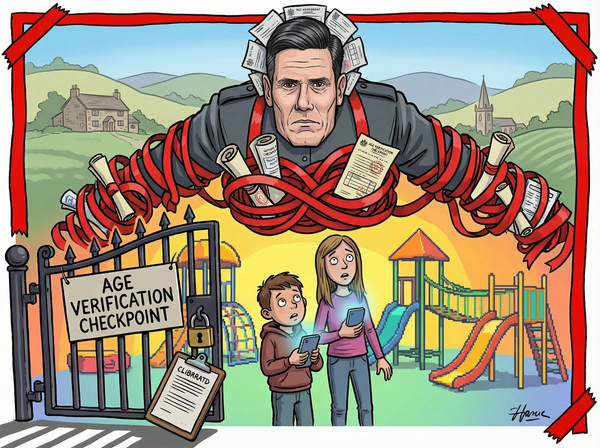
The result of this one-size-fits-all approach is the creation of a business environment that appears nothing but actively hostile to enterprise. It cannot be that an administration gets this stuff so repeatedly wrong by mere accident? The story of Splashdown Quaywest is not an isolated one. Across the South West, businesses are in survival mode, treading water, fearful of what is to come. The ambition of Torbay to become the UK’s top holiday destination is being undermined not by a lack of entrepreneurial spirit, but by a Government that seems determined to punish success.
The irony is that the Government’s policies are not just bad for business, they’re actually bad for the Exchequer. A business that’s struggling to survive is not a business that’s investing, expanding, or creating new jobs. It’s a business that’s cutting back on hours, opening only on certain days of the week. It's a business that’s laying off staff. It’s certainly not investing – what’s the point, when the next hammer-blow might only be a Rachel Reeves brain-fart away. The Government’s short-sighted focus on extracting as much tax as possible from the private sector is, in the long run, a recipe for economic stagnation.
What is needed is a fundamental change in approach. The Government must recognise that the tourism and hospitality sector is a unique and vital part of the national economy and that the South West is an important part of that. It must recognise that a one-size-fits-all approach to regulation and taxation is not just ineffective - it's actively harmful.
A Common Sense Approach
This is not a call for special treatment. It’s a call for a government that understands the difference between a seasonal business on the English Riviera and a multinational in the City of London. It’s a call for a government that is willing to create a business environment that is genuinely supportive of enterprise, that encourages investment, and that rewards success. It’s a call for a government that looks at enterprise not as ‘evil’, or an easy target at the next election, but as the real source of genuine employment (not increasingly meaningless public-sector BS non-jobs) and with it, the pride, purpose, and ultimately the social cohesion, that an honest day’s work engenders. It’s a call for common sense.
This means a root-and-branch reform of the tax system as a whole. It certainly means a moratorium on any new taxes or regulations that adversely affect the hospitality sector. It should become accepted economic wisdom of every administration going forward that different industries should be entitled to the benefit of different tax regimes. It means treating our local firms not as a fiscal harvest to be reaped by the Treasury, but as the primary source of vocational oxygen for our towns. It means the abolition of the business rates system, a tax that has never been fit for purpose. It means a recognition that the best way to increase tax revenues is to create a dynamic and growing economy, not to squeeze every last drop of blood from a struggling private sector.
The businesses of the South West are not asking for a handout. They’re asking for a level playing field. They’re asking for a government that is on their side, not on their back. They’re asking for the freedom to do what they do best - create the world-class visitor experiences that are the lifeblood of the region’s economy.
Until that happens, the story of Splashdown Quaywest will be repeated across the South West. More businesses will be forced into survival mode. More investment will be deferred. More jobs will be lost. And the slow strangulation of the South West’s most vital industry will continue, a silent and entirely avoidable tragedy of the Government’s own making.
Avoid the noose. Stay Wobbly.