The Somerset Shakedown: A Masterclass in Civic Gall
By declaring a 'financial emergency,' Somerset Council is effectively telling the Secretary of State that the people are too foolish to be trusted with a ballot paper. A deep dive into the 'referendum bypass' and the death of consent in Taunton.
By The Wobbly Editor, 14 January 2026
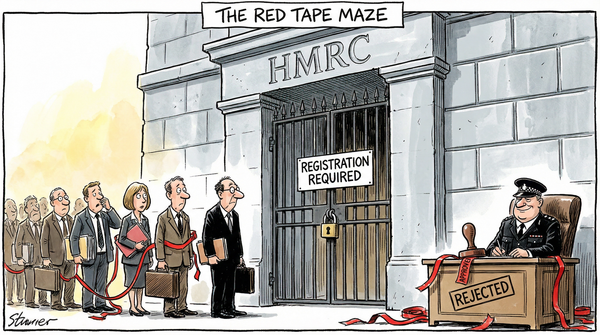
In the private sector, when a chief executive announces that their business model is "structurally flawed," they’re generally expected to clear their desk by lunchtime. In the parallel universe of Somerset local government however, such a confession is merely an opening gambit in a demand for a staggering 11 per cent pay rise from the customers.
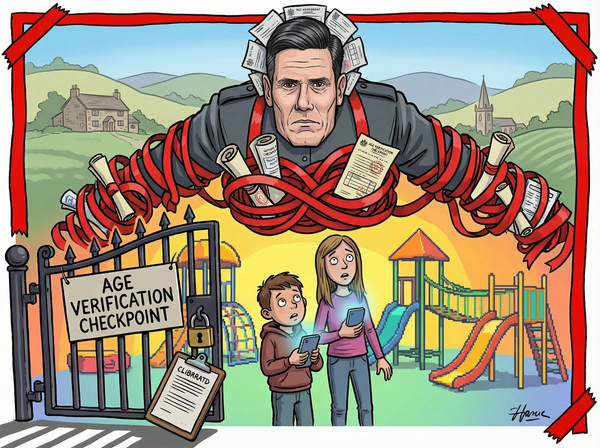
Somerset Council, a sprawling unitary behemoth that was sold to the public as a triumph of efficiency just three years ago, has officially reached the "busker’s cap" stage of its existence. Facing one of those pesky fiscal black holes that seems to be the unavoidable accessory of Liberal Democrat administration, the leadership in Taunton is now pleading with Whitehall for a 'referendum bypass' - effectively trading local democracy for a double-digit cosh over the head of the County’s tax base.
The Death of Consent
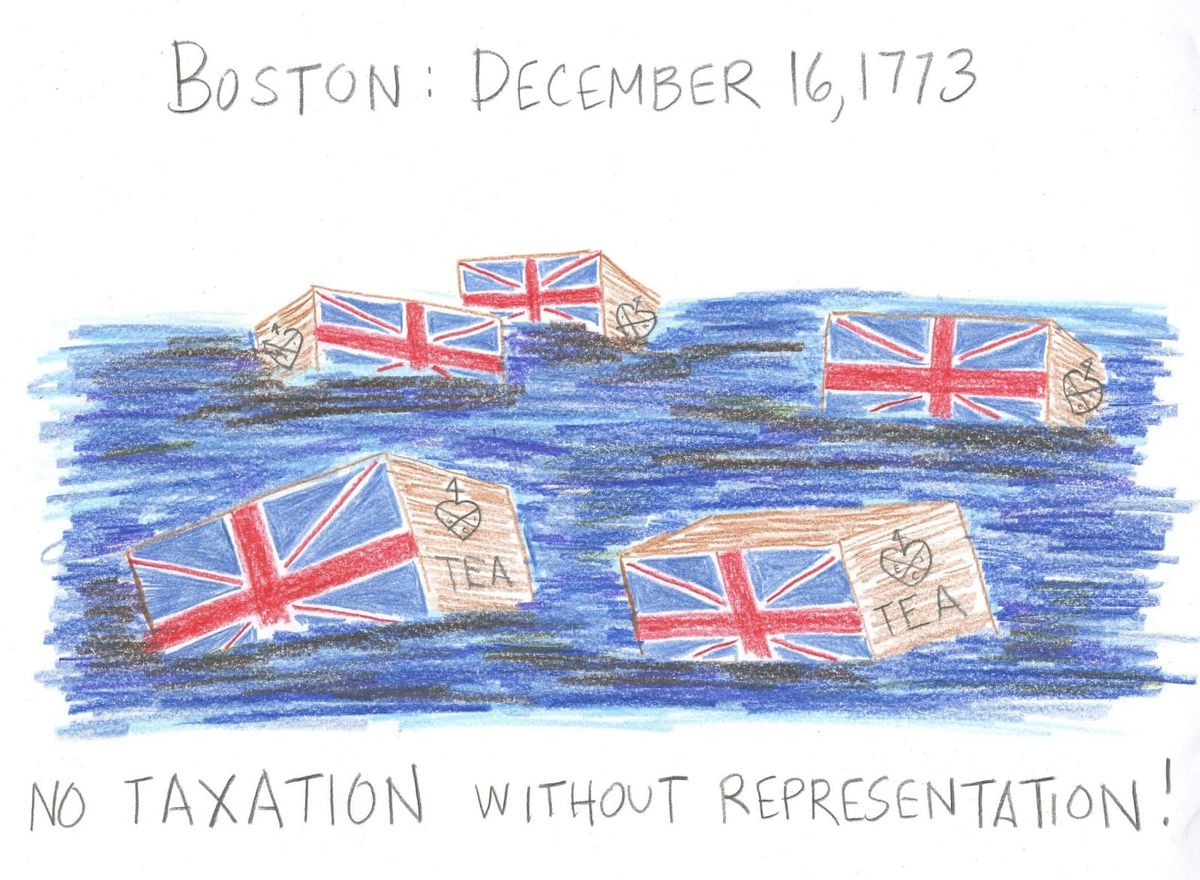
There was once a quaint notion in British public life that taxation required the consent of the governed (our early American cousins may have also had something to say about this... 'no taxation without... anyone, anyone, anyone...'). In the world of local government, this is enshrined in the referendum cap - a legislative tripwire designed to prevent town halls from behaving like 17th-century highwaymen.
But Taunton has discovered a loophole: the "Exceptional Financial Support" protocol. By declaring a "financial emergency," the Council is effectively telling the Secretary of State that the people of Somerset are too foolish to be trusted with a ballot paper. It’s a masterclass in civic gall. They have replaced the consent of the taxpayer with the convenience of the bureaucrat, trading away the democratic rights of every business owner from Frome to Bridgwater in the name of "administrative stability".
Cast your mind back a few years, and you’ll recall it was the same party arguing that the Brexit referendum be ignored. One is forced to conclude that for the orange-rosette brigade in Taunton, 'democracy' is a concept to be celebrated in the abstract, but bypassed in the particular. It appears the 'D' in their title has become purely decorative.
The ATM in the Mendips
For the readers of this journal - the entrepreneurs, the small businesses, the farmers, the family firms, the high-tech innovators – you know, those who actually keep the West Country's lights on - this 11 per cent surge is merely the latest blow in a long winter of discontent.
It arrives with businesses already grappling with the new "Make Work Pay" mandates - a suite of Whitehall employment reforms that have effectively turned the simple act of hiring into a high-stakes legal gamble. Worse still, it follows the Treasury’s recent half-arsed retreat on Inheritance Tax for family farms. Having initially planned a raid that would have seen many of the region’s multi-generational holdings liquidated to pay the taxman, under-pressure-treasurer, Rachel from Accounts, raised the exemption threshold to £2.5 million. While Labour will spin it as 'listening to the electorate', the fact remains that it was a (part-only) concession won only after the sight of thousands of tractors descending on London.
The bureaucrats in Taunton seem to view the Somerset taxpayer as a sort of infinite ATM, one that never runs out of notes and never asks for a receipt. They fail to grasp that every Pound extracted to prop up a failing County machine is a Pound that isn't being reinvested in a local engineering shop or spent in a local market town. This isn't "levelling up" – it’s a systematic hollowing out of regional capital to fund a "broken model".
Yet the real scandal isn't just that they won’t fix the model - it’s that they’re using the phrase "the system is broken" as a rhetorical smokescreen. By blaming the national funding formula, they avoid having to lift the bonnet and explain why their own 2023 business case - the one that promised millions in savings - has stalled so spectacularly. Still, what the hell when the taxpayer can be pumped for more gas (where's Ed Miliband when you need him).
The Unitary Mirage
One can’t help but look back with a certain wry nostalgia at the "Unitary Gamble" of 2023. We were promised that merging five councils into one would save £18.5 million a year through the magical alchemy of "synergy" and "efficiency." Instead, we have been treated to a bonfire of the vanities. The "efficiencies" appear to have been spent largely on redundancy packages for senior officers and a small army of consultants. Reports are now emerging of "wholly inadequate" financial controls on projects, where the public purse strings are held by a committee of optimists with no sense of gravity. The most egregious example is perhaps the Glastonbury Life Factory. This £2.9 million fiasco – currently a roofless shell subject to a police investigation - saw the Council hand over millions in public funds without ever bothering to visit the site - a 'ghost build' paid for by the Somerset taxpayer, overseen by officers who seem to have treated the grant agreement as a mere suggestion rather than a legal duty.
The Shield of the Vulnerable
Of course, whenever one dares to question this fiscal profligacy, the Council leadership immediately retreats behind the "Shield of the Vulnerable." We're told that every penny of this double-digit tax hike is essential to protect adult social care. A powerful, yet somewhat predictable, form of nothing more than emotional blackmail.
By framing every debate as "Tax vs. The Elderly," the Council neatly avoids explaining what happens to the other nine-tenths of their budget. They avoid explaining why, in an age of artificial intelligence and digital transformation, their back-office operations still resemble something from a 1970s trade union conference. If a tech firm operated with this level of administrative lethargy, it would be liquidated before the first coffee break. Why is County Hall the only place in the South West where the laws of economic gravity don’t apply???
The Price of Lethargy
This is about more than just a few extra pounds on a Band D direct debit. It’s about a fundamental breach of the social contract. We pay our rates with the expectation of competence, not a perpetual plea for a bailout.
As the Council prepares for its February budget meeting in Bridgwater, the following message must be taken up by our representatives: You cannot tax a County into prosperity. If the model is broken, stop asking us to pay for the shards. It's time to stop playing with our money and start doing the basics - collecting bins, fixing roads, etc. - with something resembling professional efficiency.
Stay Wobbly. Stay Substantial. Mind your fingers on the broken bits.